Close Menu
menu
PeopleOne Health Sign In
  • PeopleOne Health Close menu
  • SparkAmerica Calendar
  • More Articles
  • Learn About PeopleOne
  • Sign In
Healthy Living  •  Flex Your Fitness Muscle

Running Workouts with Interval Training

Jen Mueller
By Jen Mueller
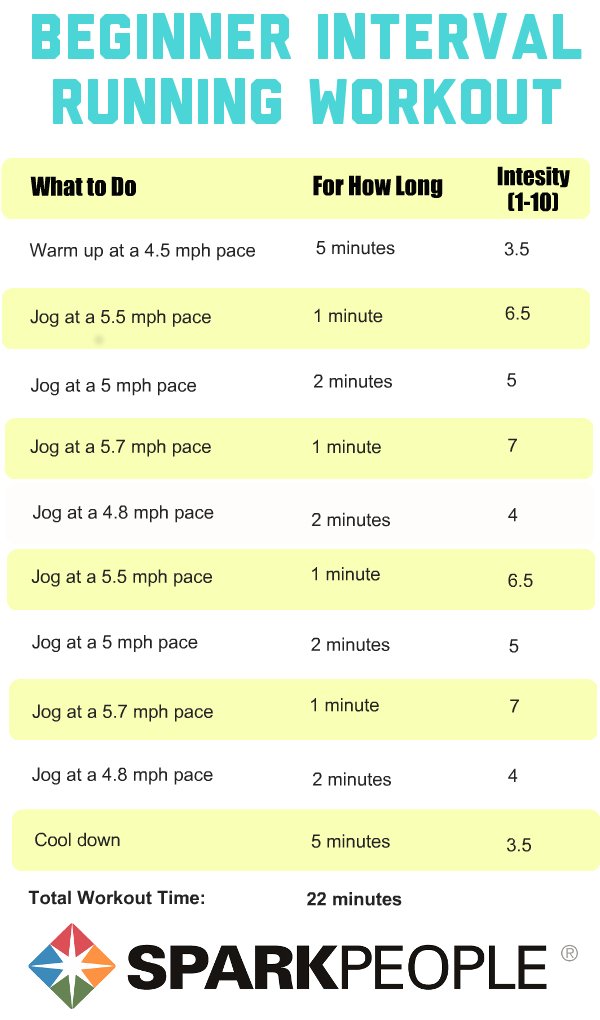
Want to boost your fitness level and burn more calories? This program uses intervals (short bursts of higher-intensity activity followed by lower intensity recovery periods), which can be a more effective way to train than exercising at one intensity level. If you're new to running or exercise, start with the Beginner program. As you progress, slowly increase your time and eventually move to the Intermediate and Advanced workouts. Because this is a general program, you may need to adjust the recommended speeds, intensities, and times to suit your fitness level.

If you have access to a treadmill, focus on the pace guidelines, working at your own intensity level. If you run outdoors and do not have access to any tools to measure your pace, then use the intensity guidelines (rate of perceived exertion) as a guide for how fast or slow to run. (Find a full RPE chart and explanation below the workouts.)

Beginner Interval Running Workout

<pagebreak>

Intermediate Interval Running Workout

<pagebreak>

Advanced Interval Running Workout

An Explanation of Using the RPE Method to Measure Intensity


Rate of Perceived Exertion (RPE) may be the most versatile method to measure exercise intensity for all age groups. Using this method is simple, because all you have to do is estimate how hard you feel like you’re exerting yourself during exercise. RPE is a good measure of intensity because it is individualized—it’s based on your current fitness level and overall perception of exercise. The scale ranges from one to 10, allowing you to rate how you feel physically and mentally at a given intensity level.
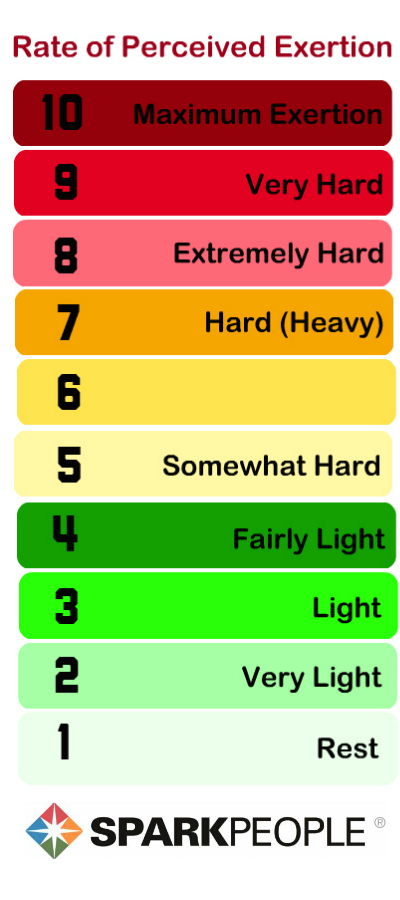
An RPE between five and seven is recommended for most adults. This means that at the height of your workout, you should feel you are working "somewhat hard" to "hard."


Related Articles

  • 10 Habits of Highly Effective Exercisers 10 Habits of Highly Effective Exercisers
  • Reference Guide to Stretching Reference Guide to Stretching
  • How to Run with Proper Form and Technique How to Run with Proper Form and Technique
  • 10 Exercises That Combat the Most Common Causes of Low Back Pain 10 Exercises That Combat the Most Common Causes of Low Back Pain
  • How to Squeeze Workouts into Your Hectic Schedule	How to Squeeze Workouts into Your Hectic Schedule
  • 6 Ways to Have Your Safest Run Ever 6 Ways to Have Your Safest Run Ever
  • 5 Fun Ways to Dive In to Aquatic Exercise 5 Fun Ways to Dive In to Aquatic Exercise
  • 6 Gentle Exercises to Prevent Your Risk of Future Falls 6 Gentle Exercises to Prevent Your Risk of Future Falls
  • What Should You Actually Do on Your Rest Days? What Should You Actually Do on Your Rest Days?
  • Are You Missing out on This Essential Exercise Element? Are You Missing out on This Essential Exercise Element?
Sign In to PeopleOne
© PeopleOne Health 2025 Privacy Policy Terms of Use